Free tool
Peptide reconstitution calculator
Enter what is in the vial, how much bacteriostatic water you are adding and the dose you were given. You get the concentration, the volume to draw, and the exact mark to line up on a U-100 insulin syringe.
We do not decide your dose. Your prescriber does that. This turns the number they gave you into a mark on a barrel.
How much is in the vial?
How much water are you adding?
The dose you were prescribed
Your prescriber sets this. We only convert it.
{{ doseLabel }}
{{ doseMcg }}
Nothing you enter is stored, sent to us or attached to an order. The calculation runs in this browser tab and is gone when you close it. This tool converts a dose you were already given into a volume. It does not suggest a dose, and it is not medical advice.
Read this first
The arithmetic is the easy part.
Every other calculator stops at the number. These are the things that actually go wrong, and none of them are arithmetic.
The maths is only as good as the label
Every number here assumes the vial contains what it says it contains. A vial from outside the regulated supply chain carries no such assurance, and no calculator can tell you otherwise. If you cannot trace what is in it, the output of this tool is meaningless.
Bacteriostatic is not sterile water
Bacteriostatic water is preserved with benzyl alcohol, which is what lets a vial keep for weeks once broached. Sterile water has no preservative and is single use the moment you open it. Substituting one for the other is a genuine infection risk, not a technicality.
Swab both stoppers, every time
The powder vial and the water vial. A stopper looks clean and is not. This is the single cheapest thing you can do to avoid an abscess, and it is the step most often skipped once something becomes routine.
Never share a vial or a needle
Not with a partner, not with a friend on the same protocol. A multi-dose vial that more than one person draws from is a bloodborne transmission route. Needles are single use and blunt on first pass.
Under two units cannot be read
If your dose lands below about two units on a U-100 barrel, you cannot draw it accurately and neither can anyone else. Adding more water spreads the same dose across more units. The tool flags this when it happens.
Used needles are not household waste
A sharps container is not optional and it is not a suggestion. Kerbside disposal is prohibited in every Australian state, and the rules for a full container differ by state.
Good Practice Supply sells consumables. We do not supply peptides, hormones or any prescription medicine, and we take no position on what you have been prescribed. Anything you inject should come from your prescriber through a regulated pharmacy. Nothing on this page is medical advice.
What we supply
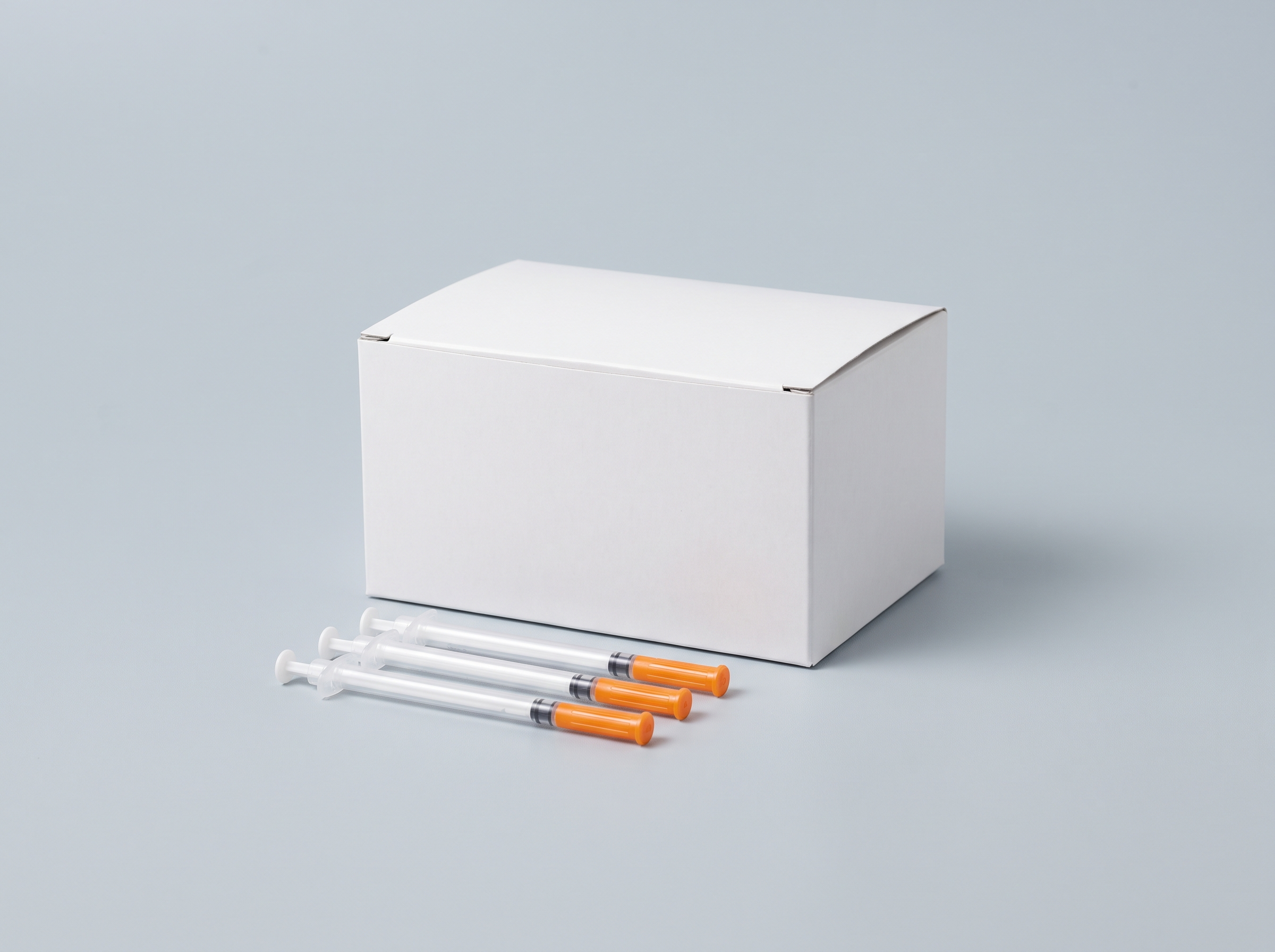
Bacteriostatic water, insulin syringes, vial adapters, drawing-up needles and swabs. All of it consumables, all priced on the page without an account.
What we do not
Whatever goes in the vial. Good Practice Supply does not stock peptides, hormones or any prescription medicine, and this calculator does not care what is in there. It only does the arithmetic.
Three steps, with a worked example.
A 10mg vial, 2mL of water and a 1mg dose. The numbers under each step are that example.
Step 1
Add the water
Push the bacteriostatic water down the inside wall of the glass, not straight onto the powder.
10mg vial + 2mL water
Step 2
Work out the strength
What is in the vial divided by the water you added. This one number drives everything after it.
5mg per mL
Step 3
Draw to the mark
Your dose divided by the strength, then read off the barrel. A U-100 barrel counts to 100, not in millilitres.
1mg dose = 20 units
Not sure which syringe reads your dose best?
The Gauge Finder covers thickness and length. This one covers what goes in the barrel.